Games can tell stories many different ways. Witcher 3 uses extensive branching dialogue sequences. Dark Souls uses a lot more environmental storytelling.
Darkspy uses these 5 storytelling elements:
1. Mission Briefs
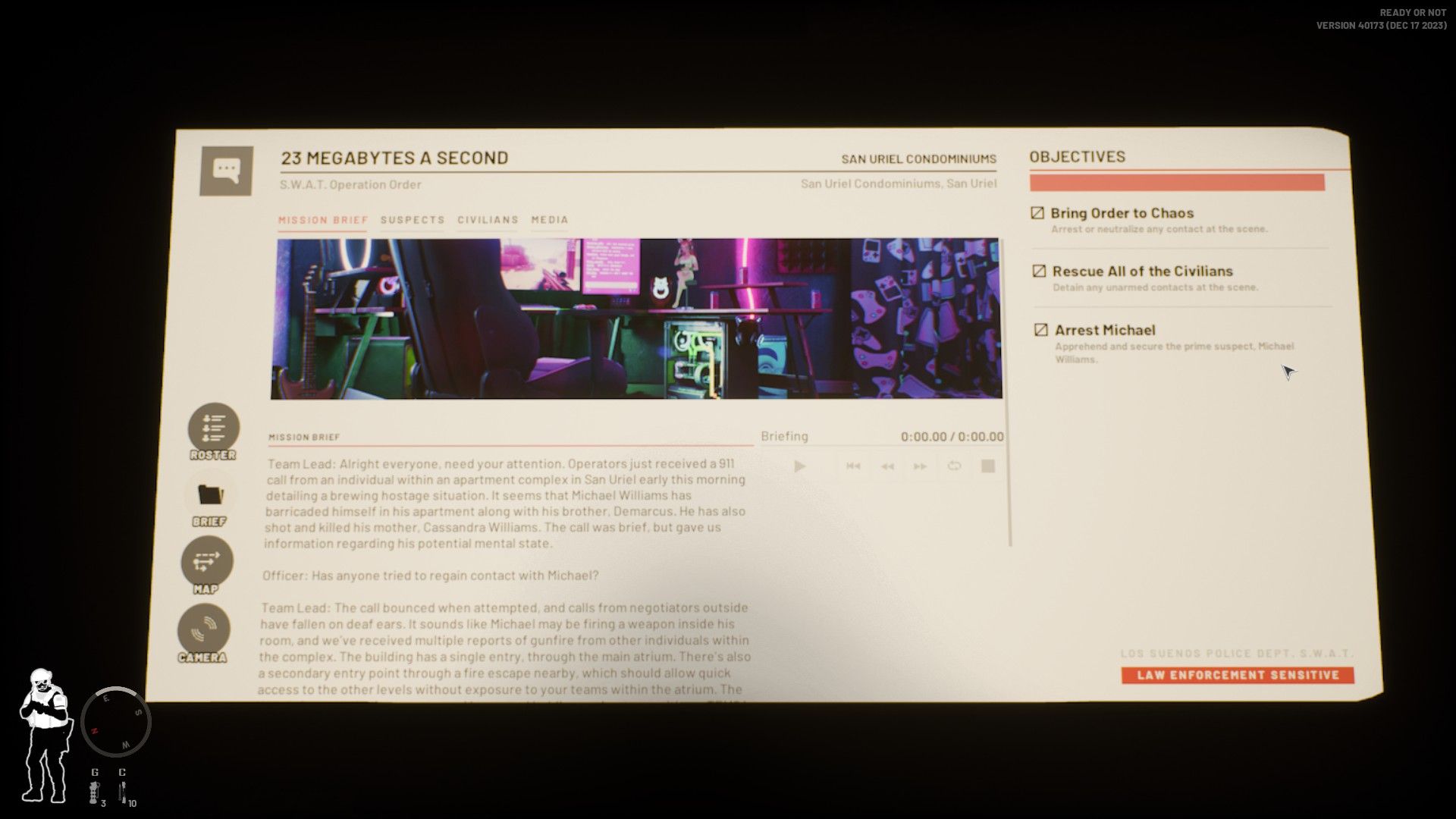
Darkspy uses diegetic mission briefs, similar to Ready or Not
Players receive intel via secure digital dossiers with images, recordings, and maps
Ready or Not Mission Brief
2. Intelligence System
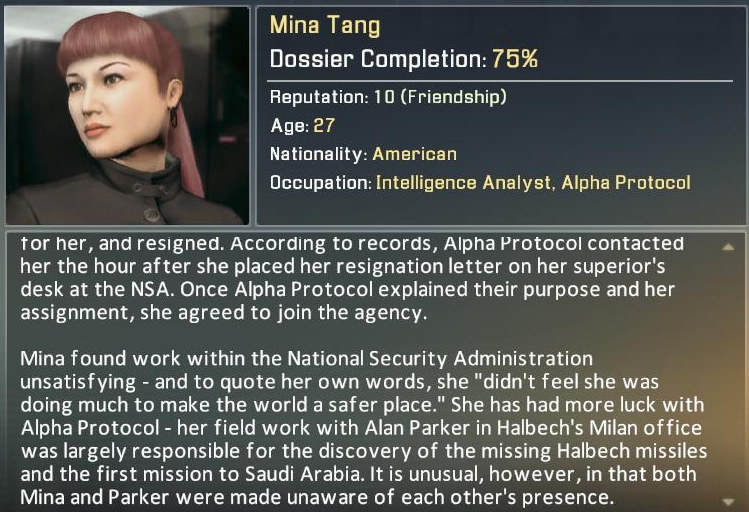
Features a dossier system inspired by Alpha Protocol.
Players can collect intel in the form of:
Audio logs that offer firsthand accounts.
Emails, notes, and classified reports scattered throughout missions.
Decryption-based mechanics to access sensitive files.
This system rewards exploration and provides additional world-building.
Alpha Protocol dossier system
3. Environmental Storytelling
The environment can tell entire "micro stories" about the people that live there
Final Thoughts
VIDEO: This video is from a GDC talk onMankind Divided, which has some great direction for environmental storytelling. We are taking a similar approach.
4. Cinematics
Darkspy features five key in-engine cutscenes for pivotal story moments:
Intro – Establishing the protagonist, the world, and the conflict.
End of Act 1 – A major revelation that alters the mission’s scope.
End of Act 2 – A critical moment of betrayal or escalation.
Endgame 1 – The player chooses ending A.
Endgame 2 – The player chooses ending B.
5. Overheard Dialogue
Players will frequently overhear NPC conversations, which provide:
Insight into enemy plans, fears, or conflicts.
Hints about mission objectives or alternative paths.
Worldbuilding details that flesh out factions and power struggles. television
Also, a TV in your HQ plays updated newscasts, reflecting the evolving world state. As players progress, broadcasts will report on the fallout of past missions.
Darkspy prioritizes gameplay depth and challenge over a heavily scripted narrative. These storytelling elements provide a compelling world without forcing players into long, intrusive cutscenes. The game delivers a rich, evolving narrative through environmental cues, mission briefs, overheard dialogue, and optional intelligence.