GAME DESIGN DOC 2.0
Game: Darkspy (working title)
STUDIO: ECHELON INTERACTIVE
Game: Darkspy (working title)
STUDIO: ECHELON INTERACTIVE

Ok, now here is another way that we go beyond just a run-of-the-mill tactical shooter.
Many tactical shooters today have no progression system, no campaign (or if they do it’s basically just a series of missions with little narrative tying it together), and are essentially just “killhouses” where you fight against some bots.
I believe that by looking at successful roguelikes and rogue-lites (Hades, Dead Cells, Risk of Rain 2, Roboquest, Returnal, and so on) we can learn something about how to create an addictive, challenging, and highly enjoyable gameplay loop for Darkspy.
Here is the campaign loop for Darkspy:
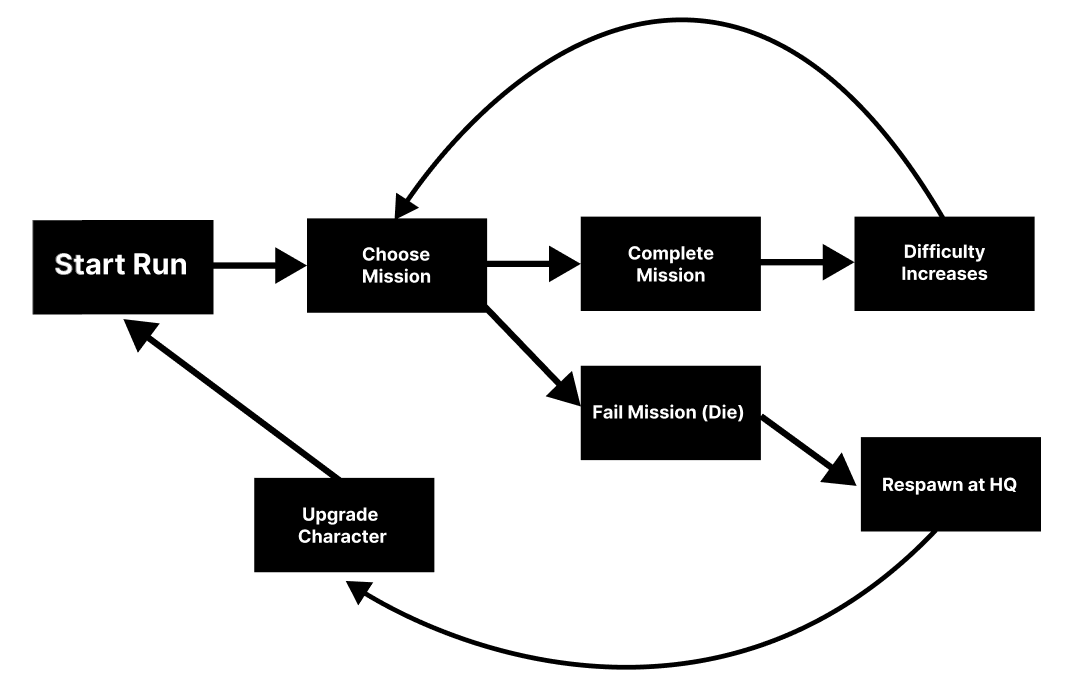
And here are the steps broken down into more detail:
The campaign begins at HQ, the player’s safe haven and base of operations. Similar to Hitman Freelancer or XCOM, this phase sets the tone for the run as the player reviews their objectives, organizes their resources, and commits to starting a new campaign.
Key Features
Design Goals:
We want players to feel a sense of weight and anticipation as they launch into a new campaign. This phase should create excitement and tension, as players know they are stepping into a high-stakes series of missions where every decision will have consequences. The act of starting a new run should feel like the beginning of a cinematic espionage thriller.
Once the campaign begins, players face the challenge of selecting which mission to tackle. Each act has four missions, and players can complete them in any order, choosing from various objectives. The chosen objective directly influences Mission 4 or adds lasting effects to the run. This system is designed to reward strategic thinking.
Key Features
Design Goals:
We aim to create a system where players feel like master tacticians, planning their approach for maximum impact. The objective selection isn’t just about preferences—it’s a key part of the overarching campaign puzzle. Players should feel encouraged to experiment with different combinations, replaying campaigns to perfect their strategy.
This phase encompasses the mission loop described previously, where players prepare, infiltrate, complete objectives, and extract. Each mission delivers an intense, self-contained experience while contributing to the larger campaign narrative.
Key Features
Design Goals:
We want players to feel immersed in the thrill of espionage during each mission, while remaining conscious of how their actions feed into the overarching campaign.
After completing a mission, the enemy adapts and evolves, making the next mission more challenging. Inspired by the adaptive AI in games like Middle-Earth: Shadow of Mordor and Civilization, this phase introduces our Reactive Resistance system. The after-action report informs players of the specific upgrades enemies have made, such as better defenses, advanced patrols, or increased surveillance, forcing players to adjust.
Key Features
Design Goals:
This phase is designed to ensure that no two runs feel identical. We want players to feel a growing sense of tension as the campaign progresses, knowing that the enemy is learning from their actions. At the same time, we want to reward adaptability and strategic planning by giving players the tools to outthink their evolving opponents.
Failure is not the end; it’s a step toward growth. If players fail a mission, they respawn at HQ, retaining their accumulated resources and progression. Much like Hades or Dead Cells, the player uses these resources to permanently strengthen their character, upgrade equipment, or unlock new abilities before attempting the run again.
Key Features
Design Goals:
We want failure to feel like part of the journey, not the end of it. Players should feel motivated to try again, armed with new upgrades and knowledge gained from their previous run. This phase reinforces the rogue-lite design philosophy, ensuring that every attempt contributes to the player’s overall progress and mastery of the game.
At the time of writing this, it is unclear the best approach:
Option 1: Hardcore
If player dies they must restart from the start of Act 1. In Hades or Dead Cells where each level takes a matter of minutes, this approach is demoralizing but manageable since you can get back to where you were before fairly quickly. The levels in Darkspy are much longer (~20 minutes) which would make having to return to the start each time very hard. This could be softened by giving the player X “lives” per run.
Option 2: Checkpoints
Each act is a checkpoint so if the player dies, they return to the start of their current act. This structure ensures that the player only needs to complete the full act once.
Option 3: Hybrid
In a run, the player has “X” lives and death causes the player to start the current act over again but consumes a life. Once the lives are gone, they go back to the start of Act 1.
In all cases, the player is retaining unlocked items and skills.
The campaign loop in Darkspy is a test of long-term strategy, adaptability, and mastery. Players choose their path, tackle missions in any order, and shape future challenges based on their decisions. With Reactive Resistance evolving enemy tactics, each run feels like a dynamic chess match, where careful planning and resource management are key. Success isn’t just about surviving one mission—it’s about navigating an entire campaign, learning from failures, and refining tactics to eventually succeed.